


Volume 232, Issue 615 December 2025
Cover image

Volume 232, Issue 6, 15 December 2025
Editorial
Invited Perspective
Special Collection on Neurovirulence
Cryptococcosis is the most common cause of meningoencephalitis in patients with HIV and is a growing cause of disease in other populations. It possesses a distinct set of neurovirulence factors and manipulates host immune responses to cause devastating disease.
ID Translational Science Update
Viral infections can disrupt the blood-brain barrier via direct and indirect mechanisms and cause neurologic complications. Current treatment is limited to antivirals and broad immune suppression to control the infection and inflammation. There is recent focus on more targeted adjunctive therapies.
Major Articles and Brief Reports
Viral Disease Pathogenesis
Intranasal COVID-19 convalescent plasma prevents severe disease in hamsters and protects against reinfection.
In a nationwide cohort of 106 969 blood donors, median SARS-CoV-2 spike IgG antibody concentrations increased during 2022. Higher spike IgG concentrations were associated with a lower risk of a first-time infection.
Our study highlights the role of human leukocyte antigen I in human cytomegalovirus resistance, introducing a repertoire score to assess antigen presentation. The repertoire score predicted human cytomegalovirus outcomes with 78% sensitivity and 80% specificity, identifying patients at high risk in cases of transplantation and offering a valuable prognostic tool.
In an in-depth immunological analysis of alternate influenza vaccination strategies in high-risk patients receiving therapy for hematological malignancy, patients with multiple myeloma had superior humoral but similar cell-mediated immune responses, compared with those with chronic lymphocytic leukemia or non-Hodgkin lymphoma.
This study combines long-read sequencing and mutation profiling of dengue virus 1 from Karachi's 2022 outbreak, identifying close links to earlier China strains and emphasizing the importance of regional surveillance to detect evolutionary changes in circulating dengue viruses.
Bacterial Disease Pathogenesis
Whole-genome sequencing differentiates recurrent MRSA bacteremia into new and relapsing infections, showing poor correlation with clinical criteria. Daptomycin and rifampin may select for resistant strains in relapsing infections. Relapse-associated strains may contribute to MRSA spread in health care settings.
Patients with recalcitrant enterococcal bacteremia exhibit diverse genomic adaptations, while E. faecium may be preadapted for persistence. Functional and structural variations suggest species-specific mechanisms of persistence, providing the foundation for future studies on enterococcal adaptation and persistence in bacteremia.
Truncation of secreted chorismate mutase (S-CM) in Mycobacterium intracellulare enhances apoptosis in macrophages, thereby reducing the bacterial burden. Consequently, strains harboring truncated S-CM exhibit lower pathogenicity and are associated with improved treatment responses in patients with M intracellulare pulmonary disease.
Individuals successfully treated for tuberculosis often develop chronic lung disease. A mouse model of infection recapitulates fibrotic scarring observed in human tuberculosis. Presence of inflammatory macrophages and loss of type 2 alveolar epithelial cells are associated with fibrogenesis.
Parasites
During experimental visceral leishmaniasis, L. donovani LPG induces cortisol production in host cells. DHEA treatment exerts dual effects- by directly inhibiting 11βHSD1–mediated cortisol production, thereby suppressing cortisol-GR-mediated anti-inflammatory signaling and also induces proinflammatory mediators that ultimately improve disease outcomes.
This study employs immune-gene targeted single-cell RNA sequencing to explore the immune landscape in patients with indeterminate and cardiac Chagas disease. It identifies unique gene expression patterns in cell subsets, uncovering immune signatures associated with disease progression and potential pathology markers
We screened a library of proteins from the parasite Babesia microti with serum from patients with acute babesiosis. Our study revealed 12 novel antigens that are immunogenic and could be used for early detection of this infection.
Vaccination with a Plasmodium falciparum transmission-blocking antigen or prior gametocyte extract exposure each primed mice for stronger antibody responses to the other, demonstrating bidirectional immune priming, lending support for transmission-blocking vaccine use in endemic settings with natural malaria exposure.
Recent reports have documented prion infections during occupational exposure in laboratory research. We implemented a methodology for prion surveillance in the laboratory, which can be used to monitor prion contamination, assess the efficiency of decontamination, and repurpose equipment and rooms.
Microbiome
Female genital tract secretions obtained from young women with bacterial vaginosis enhance HIV infection of cells, whereas secretions collected from healthy controls have inhibitory activity. The enhancing activity was associated with biomarkers of vaginal dysbiosis and specific anaerobic species.
This phase 1 clinical trial of healthy volunteers assessed the microbiome and metabolomic changes in healthy volunteers given moxifloxacin or oral vancomycin. Moxifloxacin use was associated with specific microbiome and metabolomic changes, albeit for a shorter period than vancomycin.
Viral Disease Pathogenesis
Attaining aggressive β-lactam pharmacokinetic-pharmacodynamic target provided significant clinical benefits in gram-negative infections. We found that attaining this aggressive target in critically ill OLT recipients with documented gram-negative infections could represent an effective strategy for minimizing the risk of 30-day resistance occurrence.
Intratracheal infection with a H5N1 2.3.4.4b strain caused accelerated mortality in ferrets, characterized by severe pneumonia and irreversible hypothermia prior to death or euthanasia, associated with high levels of virus replication and histopathological changes in respiratory tract, liver, and spleen.
TypeSeq2 (TS2) is an accurate, valid, and reproducible next-generation sequencing–based human papillomavirus genotyping assay. TS2 offers a new, reliable method to measure virologic endpoints in vaccine trials and natural history studies, with feasible implementation in an upper-middle-income country.
The invasive mosquito species Aedes albopictus can transmit Oropouche virus at low levels but only at warm temperatures. This suggests a potential risk of Oropouche virus spread in Mediterranean regions with established populations of this vector.
Rhinovirus infections induce airway expression of an innate immune gene profile that is associated with reduced risk of SARS-CoV-2 infection.
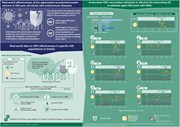
Data on RZV's effectiveness against herpes zoster in patients with autoimmune diseases (AIDs) is limited. Vaccine effectiveness ranged from 48% for multiple sclerosis to 77% for psoriasis. Two RZV doses effectively prevent herpes zoster in ≥50-year-olds with selected AIDs.
Bacterial Disease Pathogenesis
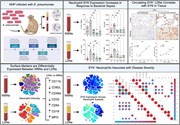
In a nonhuman primate model of bacterial sepsis, low-density neutrophils are elevated with increased heterogeneity over time and express high levels of spleen tyrosine kinase (SYK) that associate with end-organ dysfunction, indicating SYK inhibition as a novel therapeutic approach.
Vaccination with 13-valent pneumococcal conjugate vaccine reduced the risk of pneumonia hospitalizations among Medicare beneficiaries aged ≥65 years residing in long-term care. Vaccine effectiveness was highest among those with long-term care stays ≤100 days.
Mycobacterium tuberculosis (Mtb) PE_PGRS62 protein inhibits type I interferon responses by directly interacting with interferon regulatory factor (IRF) 3. Mechanistically, PE_PGRS62 inhibits IRF3-TBK1 interaction and IRF3 binding to the IFNβ promoter. In HIV-2–Mtb coinfection, PE_PGRS62-deficient Mtb decreased HIV-2 replication.
We demonstrated a positive relationship between nasopharynx-colonizing Streptococcus pneumoniae and group 3 innate lymphoid cells in the nasopharynx of children. Our findings suggest an important role for group 3 innate lymphoid cells in the nasopharyngeal carriage of S pneumoniae that presents a possible therapeutic target.
The major outer membrane protein P5 of nontypepable Haemophilus influenzae interacts with complement regulators including vitronectin. This is an immune evasion strategy used by bacteria for prevention and protection from the bactericidal activity of the human complement system.
Antimicrobial Resistance (AMR)
Whole-genome sequencing and phylogenetic characterization deepened our understanding of antibiotic resistance by generating testable hypotheses about how bacterial genetic background, patient characteristics, and medical practices can drive its emergence and spread.
HIV/AIDs
In the Veterans Aging Cohort Study (VACS) Biomarker Cohort, we found that mitochondrial DNA haplogroup L3 was associated with incident type 2 diabetes mellitus in predominantly male non-Hispanic Black people with HIV.
Metformin concentrations are substantially reduced in women with HIV on dolutegravir. The reduced metformin exposure is likely due to the combined effects of lower dolutegravir concentrations and the increase in obesity-related apparent clearance and volume of distribution.
In the BANNER study, VH3810109 (N6LS) demonstrated robust dose-dependent antiviral activity and was well tolerated in people with HIV-1, even at the highest dose evaluated. Efficacy and safety data support further development of N6LS for the treatment of HIV-1.
Fungi
We used machine learning methods to identify key features predictive of invasive mold infection case status. Factors associated with diagnostics and health care exposures emerged as the top predictors and may help inform future invasive mold infection surveillance efforts.
Candida auris preferentially colonizes skin. However, the host factors that regulate C auris skin infection are poorly understood. Our study identified that galectin-3, a multifunctional lectin, negatively regulates the antifungal activity of neutrophils, leading to poor clearance of C auris from the skin.
Blastomycosis and histoplasmosis incidence rates have increased 2-fold in the United States from 2013 to 2023, with increasing diagnoses outside of historically endemic regions. Incidence rates varied by race and ethnicity, age, and gender.


