


Volume 26, 2026
Editorial
Saccharomyces cerevisiae - Life with 6000 genes
Retrospective

Retrospective by Daniel Hartl.
Retrospective on the work of Bernard Dujon.
Retrospective on the life and work of Milan Höfer.

Retrospective on the work of Claudio De Virgilio.
Saccharomyces cerevisiae - Life with 6000 genes
Perspective
Highlights of Yeast Research from Australia and Aotearoa New Zealand
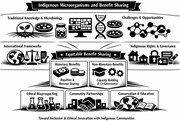
This article shares Indigenous perspectives, rights, and interests in microbial genetic resources and digital sequence information as well as benefit sharing from their utilization.
Saccharomyces cerevisiae - Life with 6000 genes
Protocols, tools and methods
Minireview
Highlights of Yeast Research from Australia and Aotearoa New Zealand
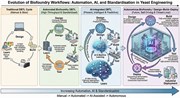
This minireview provides a contemporary overview of the latest developments in biofoundry level yeast strain engineering in Australia and in general.
Research Article
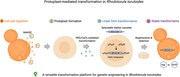
A protoplast-based transformation method was established for the oleaginous yeast Rhodotorula toruloides, providing a new tool for genetic engineering and biofuel-related research.
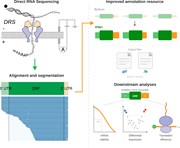
Direct RNA sequencing reads each yeast transcript end to end, delivering a refined transcriptome reference that improves the accuracy of transcript quantification and any downstream analysis relying on UTR-inclusive sequencing.
Highlights of Yeast Research from Australia and Aotearoa New Zealand
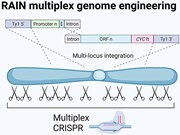
This article presents work to develop a novel multiplex genome engineering system in Saccharomyces cerevisiae to make genome engineering projects faster and cheaper.
ISSY39: Fermenting the Future: From Bread to Breakthroughs
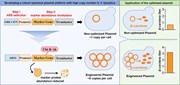
A stable high-copy plasmid system was developed for Yarrowia lipolytica, enabling stronger gene expression and improved production of valuable compounds.
Yeast as a Model for Biology & Disease
Minireview
Highlights of Yeast Research from Australia and Aotearoa New Zealand
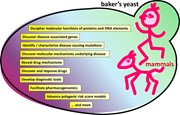
This review establishes that baker's yeast remains a highly valuable model system for understanding human diseases, elucidating conserved cellular mechanisms, and informing drug development and therapeutic strategies.
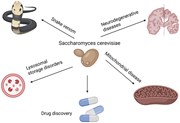
This reviews applications of yeast to both understanding human disease and advancing disease treatment that have not previously been reviewed and cites some specific examples (e.g. snake bite, lysosomal disease enzyme replacement therapy). Created in BioRender. Do, A. (2026) https://BioRender.com/yo2zglb
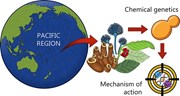
This review summarises studies on 17 natural products derived from organisms from the South Pacific, including plants, fungi, and marine organisms, and highlights the application of yeast-based chemical genetic approaches to investigate their mechanisms of action.
Saccharomyces cerevisiae - Life with 6000 genes
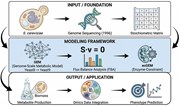
This short review provides a historical account of how yeast became an important model organism in systems biology and discuss why it will continue to serve as an important model organism in this field.
ISSY39: Fermenting the Future: From Bread to Breakthroughs
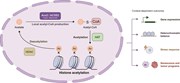
This review highlights how metabolic enzymes locally produce and recycle key chemical components directly on DNA-packaging structures, offering a newly discovered layer of spatial control over gene activity.
Food and beverages
Minireview
Saccharomyces cerevisiae - Life with 6000 genes
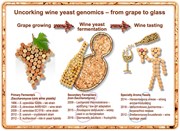
This minireview highlights key advances in wine yeast genomics.
ISSY39: Fermenting the Future: From Bread to Breakthroughs
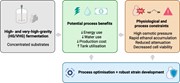
This MiniReview explains how improved yeasts and processing can make concentrated food and beverage fermentations more productive while limiting cellular stress, quality loss, and resource use.
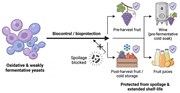
Oxidative and weakly fermentative yeasts represent a treasure trove of biological alternatives to chemical fungicides and preservatives, offering sustainable protection to fruits and beverages.
Highlights of Yeast Research from Australia and Aotearoa New Zealand
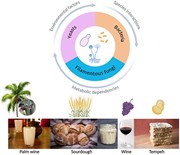
Understanding the role of microbial ecology in fermented foods can underpin the production of these popular foods in food systems globally.
Research Article
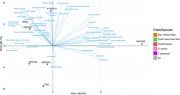
This study explores yeast diversity in Canadian artisanal whisky production, revealing distinct metabolic profiles among pilot-scale spirits created with different strains.
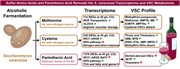
Sulfur amino acids as sole nitrogen sources and pantothenic acid deficiency induce distinct transcriptional and metabolic changes in Saccharomyces cerevisiae, affecting sulfur metabolism, nitrogen management as sulfur aroma compounds production during alcoholic fermentation.
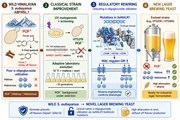
This work demonstrates that evolutionary engineering of Saccharomyces eubayanus, combined with targeted elimination of phenolic off-flavour production, can generate non-GM strains with enhanced maltose and maltotriose utilization that are suitable for industrial lager brewing.
Genetics, cell biology and metabolism
Minireviews
ISSY39: Fermenting the Future: From Bread to Breakthroughs
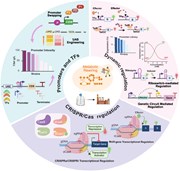
This review concluded with current transcript regulation genetic engineering tools, such as promoters, transcription factors, dynamic, and CRISPR/Cas-mediated transcriptional regulation systems, focusing on integrating synthetic biology and systems biology to create robust, controllable transcriptional frameworks for non-conventional yeast cell factories.
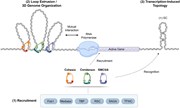
This article explains how transcription machinery helps place SMC complexes on yeast chromosomes, linking gene activity with genome organization.
Saccharomyces cerevisiae - Life with 6000 genes
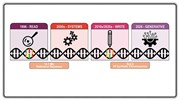
This article celebrates the achievements of the yeast sequencing project and its ongoing legacy from sequence to synthesis in a post-genomics era.
Research Articles
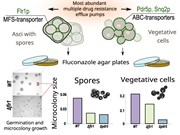
MFS-transporter Flr1 is major drug-efflux transporter in Saccharomyces cerevisiae ascospores, providing them protection from xenobiotics, while pdr5p is exploited for the same purpose in vegetative cells.
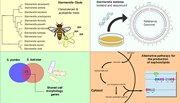
The genome of Starmerella batistae, an acidophilic yeast, was sequenced, assembled, annotated, and compared across 29 species, revealing unique genes, evolutionary links to Schizosaccharomycespombe, and diverse sophorolipid biosynthesis pathways.
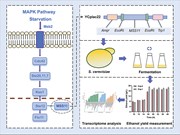
The MSS11 gene increases ethanol production.
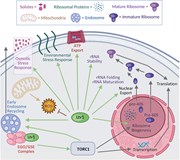
Elucidation of Ltv1's roles in oxidative stress response with gene expression differences determined through RNA-Sequencing.
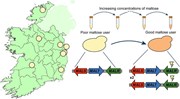
In adaptive laboratory evolution, Irish Saccharomyces eubayanus strains acquired the ability to grow on maltose mediated by duplication of the entire MAL locus and mutations in the regulatory gene MALR.
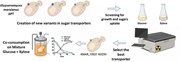
This work provides the first example of engineering an Hgt-like transporter for altered sugar specificity, allowing co-consumption of glucose and xylose for complete valorization of lignocellulosic biomass in second-generation biorefineries.
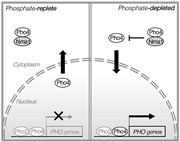
An NAD+ biosynthetic enzyme can modulate phosphate-sensing activity, linking the regulation of NAD+ homeostasis with nutrient signaling.
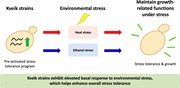
Kveik strains maintain stress-response activity even without stress, helping explain their robustness and potential value for reliable industrial fermentation.
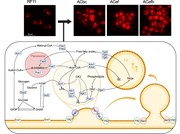
Yeast strains were developed for increased lipid production through combinatorial genetic engineering. Analysis of growth and lipid profiles demonstrated that balancing multiple genetic modifications is key to sustainable bioproduction.
Industrial and environmental biotechnology
Minireviews
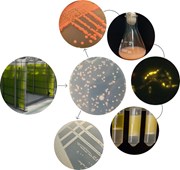
This review synthesizes current knowledge on the presence, ecological functions, and applied relevance of yeasts in marine microalgal systems.
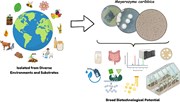
This review presents the first comprehensive overview of the yeast Meyerozyma caribbica, revealing its growing importance and diverse potential uses in biotechnology, agriculture, and environmental applications.
Highlights of Yeast Research from Australia and Aotearoa New Zealand
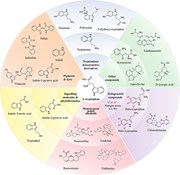
This minireview summarises recent advances in the microbial production of L-tryptophan-derived compounds in yeast cell factories. We discuss current engineering strategies and synthetic biology tools available for strain engineering, along with the remaining challenges encountered during the process.
ISSY39: Fermenting the future: from bread to breakthroughs
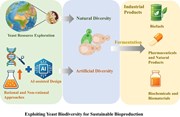
This review integrates natural and engineered yeast biodiversity with future strain repositories, AI driven design, and process optimization for sustainable biomanufacturing.
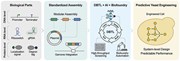
Yeast synthetic biology is moving from isolated biological parts toward integrated, data-driven design platforms that improve the predictability of complex genetic engineering.
Research Article
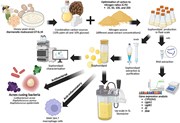
The antimicrobial biosurfactant sophorolipid is produced at high yield by the novel yeast Starmerella riodocensis, via optimization of low cost carbon and nitrogen substrates.
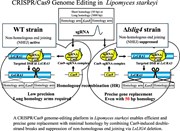
A CRISPR/Cas9 genome-editing platform in Lipomyces starkeyi enables efficient and precise gene replacement with minimal homology by combining Cas9-induced double-strand breaks and suppression of non-homologous end joining via LsLIG4 deletion.
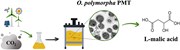
The fermentation process using methylotrophic yeast Ogataea polymorpha benefits from dynamic automated feeding of a mixture of glycerol and methanol.
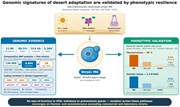
A desert wine yeast showed enhanced tolerance to heat and salt, revealing genetic and metabolic traits with potential applications in industrial fermentation.
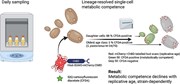
A dual-staining technique now measures both age and vitality of individual yeast cells, helping brewers and bioproducers spot aging subpopulations that weaken fermentations but remain invisible to standard tests.
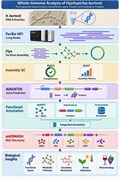
Hyphopichia burtonii Y951 genome sequencing reveals considerable intraspecific variation with several putative fermentome and flavourome relevant genes absent in the genome.
Pathogenic Yeasts
Minireview
ISSY39: Fermenting the future: from bread to breakthroughs
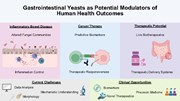
This mini review covers how yeasts function as a modulator of human health.
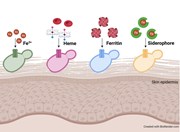
This review summarizes current knowledge on iron acquisition systems in major skin-associated fungi, including Malassezia species, Candida albicans, Candida auris, Rhodotorula mucilaginosa, and dermatophytes.
Research Article
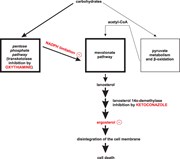
This manuscript describes the synergistic effects of oxithiamine and ketoconazole against the yeast Malassezia pachydermatis. In this paper we explain the synergistic action of these compounds.
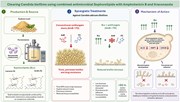
Combat a global challenge of resistance to conventional antifungal therapies through combination of clinical drugs and novel yeast-derived antibiofilm agent sophorolipids against Candida albicans biofilms.
Population genomics and ecology
Minireview
Saccharomyces cerevisiae - Life with 6000 genes
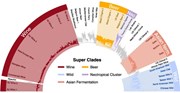
From the first eukaryotic genome to pangenome, this review highlights how yeast became a leading model for understanding biological diversity.
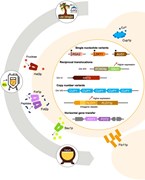
Large-scale genomic data reveal the remarkable genome plasticity of wine yeasts, driven by multi-level genomic mechanisms, and highlight gene exchange as a key driver of adaptation and innovation in domesticated fermentation environments.
Research Articles

Vineyard yeast species are present in nearby arboreal habitats but show no population differences in levels of copper and sulfite resistance.
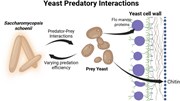
The predation efficiency of Saccharomycopsis schoenii against selected wine yeast species as prey, as well as the impact on predation efficiency of prey cell wall-related phenotypes, was investigated.
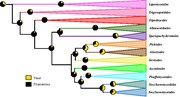
Examination of the variation and evolutionary history of filamentation across the Saccharomycotina subphylum suggests that the ability to form true hyphae and/or pseudohyphae evolved several times in the evolution of the lineage and identifies numerous associated genetic and metabolic features.
Sensing, signalling and physiology
Minireview
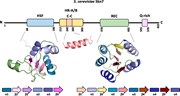
This review provides an integrated overview of Skn7, highlighting its structural features and its diverse roles in stress responses, development, and pathogenesis.
ISSY39: Fermenting the future: from bread to breakthroughs
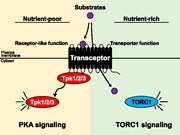
This review details nutrient transceptors in Saccharomyces cerevisiae, exploring how they link extracellular nutrient availability to intracellular signaling.
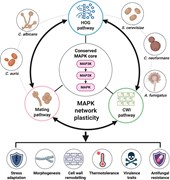
This review compares how disease-causing fungi use related MAPK signaling pathways to survive stress and cause infection, revealing evolutionary differences that point toward promising new targets for antifungal drugs.
Research Article
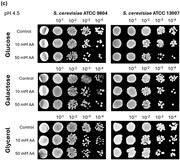
Yeast adapts to acetic acid stress via thiol groups.


