Volume 149, Issue 10October 2026
Cover image

Volume 149, Issue 10, October 2026
Editorial
Scientific Commentaries
This scientific commentary refers to ‘White matter lesions disrupt cholinergic pathways important for cognition in Parkinson’s disease’, by Carli et al. (https://doi.org/10.1093/brain/awag172).
This scientific commentary refers to ‘Clinical markers of disease progression in the prodromal to overt alpha-synucleinopathy continuum’, by Roascio et al. (https://doi.org/10.1093/brain/awag193).
This scientific commentary refers to ‘Mapping human glymphatic compartments and putative meningeal border pathways in diseased models’, by Wu et al. (https://doi.org/10.1093/brain/awag203).
Essay

The British Migraine Association was the world’s first patient advocacy organization in the field of headache. Mark Weatherall traces the origin of the association to 1955, and shows how politics and medicine created ‘Establishment Migraine’ in the shape of The Migraine Trust in 1965.
Opinion
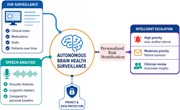
Rezaii and Estiri argue that standard cognitive screening is too infrequent, burdensome, and costly to detect most cases of early Alzheimer’s disease. They suggest that autonomous AI, passively reviewing routine medical notes and patient speech at near-zero cost, could enable proactive early detection for timely intervention.
Review Articles
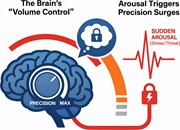
Lyndon proposes that functional neurological disorder reflects disordered precision control in predictive coding. Arousal can transiently over-amplify confidence in maladaptive predictions so that they override intact sensory feedback, producing fluctuating, cross-domain symptoms, altered agency, and gradual entrenchment over time.
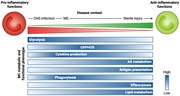
Wishart et al. review how metabolic pathways regulate the behaviour of monocyte-derived immune cells in brain disease. They show that local cues shape metabolism and drive context-dependent immune functions across conditions, highlighting immunometabolism as a framework for understanding CNS pathology.
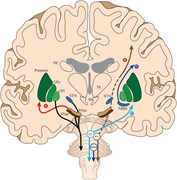
Suppa et al. explore why rigidity in Parkinson’s disease remains poorly understood, highlighting inconsistencies in its definition and interpretation. They review clinical and neurophysiological evidence, summarize key knowledge gaps and propose new approaches to better characterize its underlying mechanisms and clinical impact.
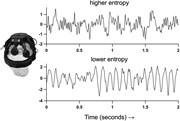
Carhart-Harris reviews the evidence base for the entropic brain hypothesis, which links variations in conscious states to differences in brain entropy. He discusses the implications of the model for understanding consciousness and for guiding clinical approaches in psychiatry and neurology.
Update
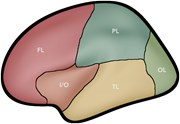
Cossette-Roberge et al. review evidence that some brain regions become thicker, rather than thinner, in temporal lobe epilepsy. They conclude that this cortical hypertrophy may reflect seizure-related changes or compensation within brain networks, challenging the view of epilepsy as a disorder characterised only by tissue loss.
Report
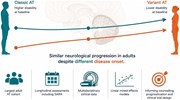
Ataxia-telangiectasia (AT) is a rare, multisystem neurodegenerative disorder with marked clinical heterogeneity. Studying the largest adult AT cohort published to date, Hensiek et al. find that although disease severity differs across AT subtypes earlier in life, neurological decline progresses at a similar rate across subtypes in adulthood.
Clinical Trial
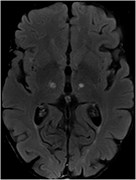
With MR-guided focused ultrasound and radiosurgery, we are witnessing a renaissance of ablative treatments for drug-resistant essential tremor. Régis et al. report the first prospective phase 2 trial of staged bilateral radiosurgery, demonstrating tremor reduction with no significant worsening of cognition, speech, gait or balance.
Original Articles
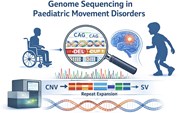
Schierbaum et al. performed whole-genome sequencing in 100 children and young adults with unexplained progressive movement disorders and identified genetic diagnoses in 27%, including variants missed by prior testing. The results highlight the value of genome sequencing for improving diagnosis and care in rare neurological diseases.
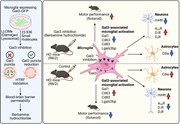
Siew et al. identify berbamine hydrochloride as a brain-penetrant small molecule inhibitor of intracellular galectin-3, a protein that drives brain inflammation. Using a new cell-based screening method, they show that this compound reduces microglial activation and improves symptoms in a Huntington’s disease mouse model.
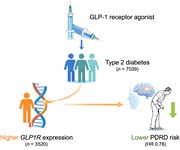
Woo et al. analysed >7000 adults with type 2 diabetes initiating GLP-1 receptor agonists. Higher genetically proxied GLP1R expression was associated with a lower risk of Parkinson’s disease and related disorders, suggesting GLP1R-mediated biology may contribute to variation in benefit from GLP-1 receptor agonists.
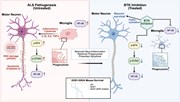
Liu et al. identify BTK as an upstream regulator of cGAS–STING–NF-κB signalling in ALS and show that BTK inhibition with zanubrutinib protects both motor neurons and microglia. This dual-action approach reduced neuroinflammation, improved motor function, and extended survival in an ALS mouse model.
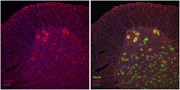
Gaur, Angerer et al. discovered that neurons—not just glial cells—produce chitinases in the healthy brain and spinal cord. Across ALS mouse models, patient CSF and post-mortem cortex, they demonstrate an isoform-specific dysregulation, highlighting chitinases as markers of neural injury rather than inflammation alone.
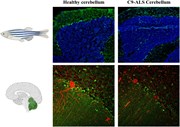
Singh et al. show that C9orf72 deficiency causes cerebellar degeneration that precedes motor symptoms in ALS. Downregulation of the purine biosynthetic enzyme Paics causes this loss of cerebellar neurons via the accumulation of DNA damage. Restoring paics expression reduces DNA damage and rescues cerebellar pathology.
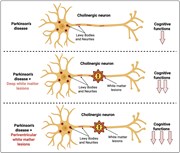
Carli et al. show that periventricular white matter lesions contribute to cognitive decline in Parkinson’s disease by disrupting cholinergic projections from the basal forebrain. Lesion burden may serve as a mechanistically meaningful biomarker for predicting cognitive trajectories and informing targeted interventions.
See Murphy et al. (https://doi.org/10.1093/brain/awag295) for a scientific commentary on this article.
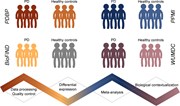
Using whole-blood transcriptomic data from over 4000 individuals across four cohorts, Beric et al. identify 296 Parkinson’s disease-associated transcripts, many of which are dysregulated before symptom onset. Among them, CD55 and DLD emerge as particularly promising minimally invasive biomarkers for early diagnosis.
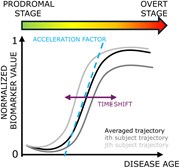
Roascio et al. trained a machine learning model to track clinical progression in the prodromal to overt alpha-synucleinopathies continuum. They identified three individual parameters, linked to cortical and subcortical neurodegeneration metrics, that could serve as reliable biomarkers of disease progression.
See Nepozitek et al. (https://doi.org/10.1093/brain/awag306) for a scientific commentary on this article.
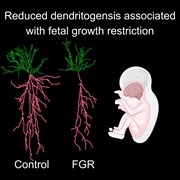
White et al. combine human and animal data to show that fetal growth restriction impairs postnatal brain development. Low birth weight is associated with reduced dendritic outgrowth in hippocampal neurons, suggesting that impaired dendritogenesis is programmed in utero and leads to lasting structural and functional deficits.
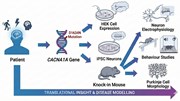
Niu et al. characterize a loss-of-function CACNA1A calcium channel mutation that causes epilepsy and ataxia. Using heterologous systems, patient iPSC-derived neurons, and a knock-in mouse model, they link altered channel biophysics to neuronal hyperexcitability and disease-relevant behavioural phenotypes.
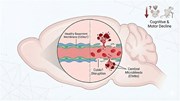
Kim et al. show that endothelial-specific Col4a1 deletion leads to basement membrane thinning, progressive cerebral microbleeds, and neurobehavioural decline. By integrating mouse data with human genetics, they implicate dysregulated collagen IV homeostasis as a causal mechanism in cerebral small vessel disease.
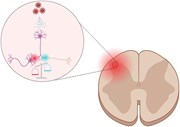
Disruption of circuitry homeostasis in the spinal dorsal horn, manifesting as enhanced excitatory inputs onto excitatory neurons alongside reduced excitatory inputs onto inhibitory neurons, drives HIV-associated pain. Chen et al. identify synaptic and molecular mechanisms underlying these forms of pathogenic plasticity.
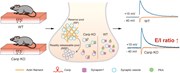
Xu et al. show that the long non-coding RNA Carip modulates pain-like behaviours by controlling synaptic transmission in the lateral parabrachial nucleus. Carip knockout alters pain sensitivity by disrupting the neuronal excitation–inhibition balance, which can be normalized by restoring downstream signalling.
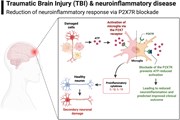
Cowley et al. show that CNS-penetrant, selective P2X7 receptor antagonists reduce the release of pro-inflammatory cytokines from human microglia and brain tissue. These findings support P2X7 receptor antagonism as a potential therapeutic strategy to improve outcomes following traumatic brain injury.
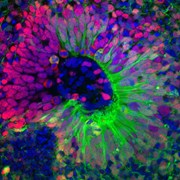
Maletic et al. used patient-derived mosaic cortical organoids to model focal cortical dysplasia caused by two-hit DEPDC5 mutations. They show that biallelic DEPDC5 loss disrupts corticogenesis and increases neuronal excitability, providing mechanistic insight into how these mutations lead to drug-resistant epilepsy.
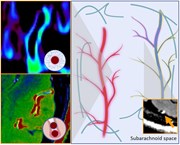
Wu et al. used MRI to characterize subarachnoid glymphatic compartments in humans and obtained evidence consistent with a potential perivascular shunting pathway. They hypothesize that tracer accumulation at specific leptomeningeal perivenous sites may reflect a reservoir-like structure within the inner subarachnoid membrane.
See Ford et al. (https://doi.org/10.1093/brain/awag315) for a scientific commentary on this article.
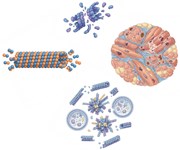
Johari et al. identify novel TUBA4A variants that cause primary myopathies, often without CNS involvement, expanding the known phenotypic spectrum. Their findings establish myo-tubulinopathies as a new disease group and reveal how altered tubulin disrupts muscle function.
Book review