


Volume 143, Issue 1January 2020
Cover image

Cover image: Applying network science techniques to probe the intrinsic functional organization of the brain uncovers a key basal ganglia-thalamocortical circuitry underlying the propensity for secondary generalization of temporal lobe seizures. From He et al. Disrupted basal ganglia–thalamocortical loops in focal to bilateral tonic-clonic seizures. Pp. 175–190.
Volume 143, Issue 1, January 2020
Editorial
Scientific Commentaries
This scientific commentary refers to ‘ZPR1 prevents R-loop accumulation, upregulates SMN2 expression and rescues spinal muscular atrophy’, by Kannan et al. (doi: ).
This scientific commentary refers to ‘Expansion of GGC repeat in human-specific NOTCH2NLC gene is associated with essential tremor’ by Sun et al. (doi: ).
This scientific commentary refers to ‘Particulate matter and episodic memory decline mediated by early neuroanatomic biomarkers of Alzheimer’s disease’, by Younan et al. (doi: ).
This scientific commentary refers to ‘Amyloid and tau imaging biomarkers explain cognitive decline from late middle-age’, by Betthauser et al. (doi: ).
Review Articles

Freezing of gait is disabling and difficult to treat. Weiss et al. review recent advances in clinical phenomenology, genetics, multimodal imaging, neurophysiology and neuromodulation, and synthesize the findings into an overarching perspective linking these domains. Finally, they propose topics for future research to obtain further insights and to devise new therapeutic approaches.
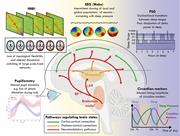
Fluctuating cognition is perhaps the most enigmatic and least understood of the core features of Lewy body dementia. Matar et al. review the phenomenology, neuropsychological, physiological and imaging correlates of fluctuations, and then integrate them into a testable heuristic framework from which new insights can be gained.
Report
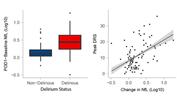
Is there a causal relationship between delirium and cognitive decline? Casey et al. show that postoperative delirium is associated with an increase in plasma levels of neurofilament light, a neuronal injury biomarker. Levels of neurofilament light correlate with peak delirium severity, suggesting that neuronal injury contributes to delirium pathogenesis.
Original Articles
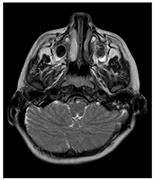
Rhombencephalosynapsis is a rare cerebellar malformation of unknown cause. Mak et al. report the identification of a cluster of de novo truncating mutations in the MN1 gene in patients with a novel syndrome that comprises midface hypoplasia, severe language delay and distinctive brain malformations including an atypical form of rhombencephalosynapsis.
See Hensel et al. (doi:) for a scientific commentary on this article.
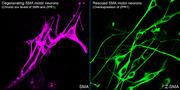
In spinal muscular atrophy (SMA), chronic low levels of SMN lead to neurodegeneration via accumulation of R-loops and DNA damage. Kannan, Jiang et al. show that overexpression of ZPR1 prevents R-loops and rescues DNA damage in SMA mice and patient cells. ZPR1 enhances SMN2 expression and rescues the SMA phenotype.
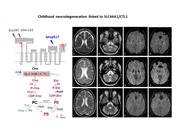
Fagerberg et al. describe a novel childhood-onset neurometabolic disease caused by choline transporter deficiency with autosomal recessive inheritance. They identify three separate causative mutations in SLC44A1, and show that impaired transport of choline for membrane phospholipid biosynthesis is a critical mechanism in disease pathogenesis.
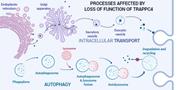
Van Bergen et al. add to the growing number of ‘trappopathies’ by identifying a pathogenic variant in TRAPPC4 in seven children with early-onset seizures and developmental delay. The incompletely penetrant splicing defect reduces protein levels and TRAPP complex assembly, and impairs vesicular trafficking and autophagy in patient cells and yeast.
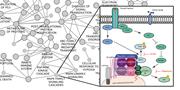
Subependymal giant cell astrocytomas (SEGAs) cause serious neurological complications in patients with tuberous sclerosis complex. Using high-throughput sequencing, Bongaarts et al. identify MAPK/ERK activation in SEGAs, potentially via the "Ragulator complex", and propose that the MAPK/ERK pathway could be a novel treatment target.
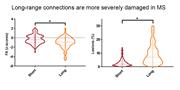
The severity and effects of damage to short- and long-range structural connections in multiple sclerosis are unknown. Meijer et al. report that long-range connections are more severely damaged than short-range connections. Damage to long-range connections is more strongly associated with reduced structural network efficiency, abnormal functional connectivity, and impaired cognition.
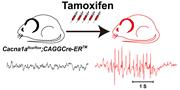
Inborn errors of CACNA1A-encoded P/Q-type calcium channels give rise to childhood absence epilepsy, ataxia and dystonia. Miao et al. show that adult-onset ablation of the P/Q channel alpha subunit in mice replicates the inborn loss-of-function phenotype, and that distinct thalamic bursting mechanisms can generate similar patterns of cortical hypersynchrony.
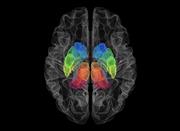
The absence of a blueprint for the interactive pathways underlying secondary seizure generalization has hindered epilepsy management. He et al. reveal how focal to bilateral tonic-clonic seizures reshape the brain, promoting thalamus-mediated cortico-cortical communication and reducing basal ganglia–thalamus interactions through the direct basal ganglia pathway.
Whether haematological traits contribute equally to all ischaemic stroke subtypes is unclear. By analysing summary statistics from genome-wide association studies of haematological traits and MEGASTROKE, Harshfield et al. show that genetically altered levels of several coagulation factors are associated with ischaemic, cardioembolic, and large-artery stroke, but not small-vessel stroke.
See Westenberger and Klein (doi:) for a scientific commentary on this article.
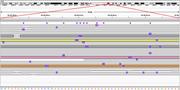
Sun et al. identify an abnormal GGC repeat expansion in the 5’ region of NOTCH2NLC in 11 families from a cohort of Chinese pedigrees with essential tremor. The results provide strong evidence that essential tremor is a family of diseases with high clinical and genetic heterogeneity.
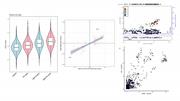
Variation in GBA confers a spectrum of increased risk for Parkinson’s disease. Blauwendraat et al. report that an individual’s overall Parkinson’s disease genetic risk score modifies the effect of GBA variants on disease risk and age at onset. Genes implicated in lysosomal function exert the most influence on GBA-associated risk.
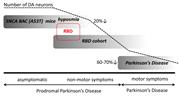
Taguchi, Ikuno et al. develop a transgenic mouse model of prodromal Parkinson’s disease that expresses mutant human alpha-synuclein from a bacterial artificial chromosome. The mice show hyposmia as well as REM sleep without atonia. By providing insights into early pathogenesis, the model should aid the development of disease-modifying therapies.
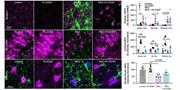
Microglia are activated in Huntington’s disease prior to symptom onset. Crapser et al. show that eliminating microglia from the R6/2 mouse model of Huntington’s disease reduces motor and cognitive impairments, accumulation of mutant huntingtin, and striatal volume loss. It also prevents the loss of perineuronal nets.
See Power (doi:) for a scientific commentary on this article.
How does exposure to air pollution increase dementia risk? In a longitudinal study of cognitively intact elderly, Younan et al. find that greater exposure to fine particulate matter is associated with faster decline in immediate recall/new learning, partly mediated by grey matter atrophy in areas vulnerable to Alzheimer’s disease pathology.
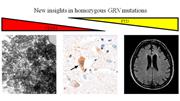
Homozygous GRN mutations produce neuronal ceroid lipofuscinosis-11, a rare lysosomal storage disorder. Huin et al. expand the phenotypic spectrum of homozygous mutations to include late-onset frontotemporal dementia. They demonstrate that some GRN mutations are hypomorphic, and reveal lysosomal dysfunction in the brains of homozygous patients, thus providing new insights into GRN disease mechanisms.
See Schöll and Maass (doi:) for a scientific commentary on this article.
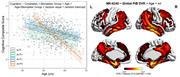
Betthauser et al. present the results of a retrospective analysis of cognitive trajectories in initially unimpaired adults stratified according to PET amyloid and tau status. Individuals with elevated levels of both pathophysiological beta-amyloid and tau show faster cognitive decline during late middle-age than those with one or no elevated biomarkers.
Differences in cognitive performance over time were investigated between neuroimaging biomarker groups for beta-amyloid and tau in initially cognitively unimpaired persons. The combination of pathologic beta-amyloid and tau was detrimental to cognitive decline in preclinical AD during late middle-age. Middle-age health factors likely do not influence AD-related preclinical cognitive decline.
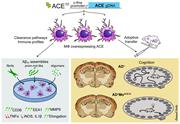
Angiotensin-converting enzyme (ACE) can degrade Aβ. Koronyo-Hamaoui et al. show that administration of ACE-overexpressing macrophages, by bone marrow transplantation or monocyte blood enrichment, preserves vascular integrity and cognition while enhancing resistance to Aβ in Alzheimer’s disease-model mice. Immunotherapy with peripheral monocytes overexpressing ACE has the potential to fight Alzheimer’s disease.
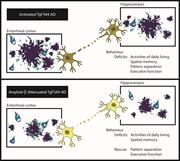
Aβ clearance does not improve cognition in patients with Alzheimer’s disease. Using a transgenic rat model, Morrone et al. show that Aβ attenuation has no effect on entorhinal tau or entorhinal-hippocampal network dysfunction, explaining the persistence of spatial memory deficits. However, it improves hippocampal function, thereby rescuing pattern separation and executive function.
Dorsal Column
Grey Matter

‘Neuron’ or ‘neurone’? While it is often assumed that these different spellings reflect usage of American versus British English, there are also inconsistencies within these cultural boundaries. Mehta et al. review historical, etymological and linguistic evidence concerning the spelling of ‘neuron(e)’ and conclude that the only correct spelling is ‘neuron’.


