


 https://orcid.org/0000-0001-8994-5219

Abstract
Background
Despite sustained research interest among medical students and resident doctors, the UK clinical academic workforce is declining. The current study examined associations between mentorship, childhood socioeconomic disadvantage, research access, and early engagement in clinical academia.
Methods
A nationwide cross-sectional survey of UK medical students and resident doctors from January to April 2026, assessing mentorship, perceived research barriers, confidence, academic outputs, and awareness of formal academic pathways. Indices of childhood socioeconomic disadvantage and research barrier burden were developed. Multivariable logistic regression identified factors associated with a high perceived research barrier burden.
Results
A total of 1255 responses was included: 848 medical students and 407 resident doctors. Among 824 respondents with complete socioeconomic data, 7% (n = 58) had high childhood socioeconomic disadvantage. Current mentorship was reported by 31% of medical students (n = 260) and 43% of resident doctors (n = 174). The most common barriers were time constraints or clinical demands (59.1%, n = 742), limited access to research-active supervisors (39.9%, n = 501), and perceived high financial costs (34.7%, n = 436). High perceived research barrier burden was more common among respondents with high childhood socioeconomic disadvantage than those with low disadvantage (34.5% vs 18.1%). After adjustment, high childhood socioeconomic disadvantage remained associated with higher perceived research barrier burden (OR 2.42, 95% CI 1.20 to 4.81, P = .012), whereas current mentorship was associated with a lower perceived research barrier burden (OR 0.21, 95% CI 0.12 to 0.34, P < .001).
Conclusion
Despite research interest, access remains uneven. Structured mentorship, transparent opportunities, financial support, and practical research training may widen access to clinical academic careers.
What is already known on this topic: The United Kingdom’s academic medical workforce is declining, with medical students and resident doctors facing barriers to research engagement, including limited supervision, limited visibility of research opportunities, financial constraints, and competing clinical responsibilities.
What this study adds: In this nationwide cross-sectional study of UK medical students and resident doctors, current mentorship was associated with lower odds of a high research-barrier burden, greater research confidence, higher reported academic productivity, and greater awareness of formal academic pathways. High childhood socioeconomic disadvantage was associated with a greater burden of research barriers.
How this study might affect research, practice, or policy: Research access should be supported through structured mentorship, transparent project opportunities, financial support, and practical research training, especially for medical students and resident doctors from underprivileged backgrounds.
Introduction
The decline in the UK clinical academic workforce is a growing concern. Recent data from the UK Medical Schools Council found 3090 full-time equivalent clinical academics nationwide in 2024, reflecting a 28.8% decline since 2015. Furthermore, the proportion of consultants in clinical academic positions has decreased from 4.7% in 2009 to 3.4% in 2024 [1]. These trends highlight the need for clinicians engaged in research to promote evidence-based practice and innovation to improve patient outcomes [2, 3]. Alongside this workforce decline, recent government funding cuts have removed funding streams that support senior clinical academics, adding further pressure on the clinical academic pipeline [4]. Together, these pressures suggest that clinical academic careers are becoming less attractive, highlighting the importance of understanding how early involvement in research and academic career pathways influences UK medical students and resident doctors [5].
Access to research is multifactorial, shaped by individual, institutional, and structural factors [6]. Medical students commonly report barriers to research engagement, including inadequate research training, limited confidence, poor visibility of formal opportunities, and competing clinical demands [7]. Mentorship is guidance from a more experienced individual that supports career development, research skills, and access to professional networks [8]. In medicine, this support may be formal, through institutional schemes, or informal, through clinical placements, societies, conferences, family contacts, or self-directed approaches. Informal mentorship may therefore be harder for students from lower socioeconomic backgrounds to access, as it often depends on prior knowledge of the hidden curriculum, confidence in approaching supervisors, social networks, and the ability to undertake unpaid or time-intensive research work [9, 10]. Mentorship may help address these barriers by improving access to supervisors, research networks, academic guidance, and opportunities to enhance research productivity. However, the evidence remains largely observational, limiting causal inference about mentorship and academic progression [8]. These barriers appear particularly pronounced among ethnic minority medical students, who consistently report lower awareness of research opportunities and limited access to research supervision [11]. This may create a cumulative disadvantage, in which students without early mentorship have fewer opportunities to develop research outputs, academic networks, and confidence that later strengthen their competitive applications. While mentorship schemes are available through the royal colleges, they are primarily aimed at trainees in higher speciality training pathways, leaving medical students to rely on informal networks and incidental encounters with research-active clinicians [11, 12].
Although the proportion of medical school entrants from the most deprived areas in the UK has increased from 6% to 14% over the past decade, applicants from these regions continue to face lower acceptance rates than those from the least deprived areas [13]. Among medical students, research productivity and participation have been associated with school, gender, ethnicity, and family connections to medicine [9, 10]. These findings suggest that inequalities present before medical school may persist throughout training, shaping the understanding of academic career pathways, access to academic opportunities, and the financial capacity to undertake unpaid or time-intensive research activities. Structural and social inequalities may, therefore, affect participation and progression within the clinical academic pathway.
The MENTOR study aimed to evaluate access to mentorship, research opportunities, and formal academic career pathways among medical students and resident doctors in the UK using a nationally distributed questionnaire.
Methods
Study design
A national cross-sectional study was conducted using a tailored online questionnaire. The development of the questionnaire was informed by an initial scoping review and electronic interviews with medical students and resident doctors, and was iteratively reviewed by medical students, resident doctors, and academic clinicians to ensure its accessibility and relevance within the academic field (Supplementary Table S1 and Supplementary Figure S1). The reporting of the questionnaire was guided by the Checklist for Reporting Results of Internet E-Surveys (CHERRIES) guideline [14]. Further details on the questionnaire design are available in the supplementary methods. This study was executed in accordance with the Strengthening the Reporting of Observational Studies in Epidemiology (STROBE) guidelines, as outlined in the supplementary methods (Supplementary Table S2) [15].
Participant recruitment
The questionnaire was distributed nationwide from January to April 2026 using a decentralized recruitment approach through the UK Plastics Research Collaborative (UKPRC) network [16, 17, 18]. Regional UKPRC collaborators circulated the questionnaire via institutional email lists, digital learning platforms, societies, and social media. Eligible participants were all resident doctors and medical students currently working or studying within the UK during the 2025–26 academic year, from September 2025 to September 2026.
Objectives
The primary objective was to evaluate access to mentorship, research opportunities, and academic training pathways among UK medical students and resident doctors. Secondary objectives included examining the role of mentorship in engagement with medical and surgical research, identifying barriers to research training and academic career advancement, and exploring how networking and socioeconomic background affect research confidence, preparedness, and academic productivity.
Definitions
The participant group was classified as a medical student or a resident doctor according to self-reported training stage. Current mentorship was defined as self-reported access to mentorship in medicine or surgery. Mentorship formality was derived from the reported route into mentorship and classified as no mentorship, informal mentorship, formal mentorship, other route, unclear route, or unknown.
Childhood socioeconomic disadvantage was measured using a four-item cumulative index comprising free school meals, receipt of means-tested benefits, below-average General Certificate of Secondary Education (GCSE) performance in secondary school, and household financial difficulty during secondary education. These indicators were selected because they are commonly used in UK educational research and widening participation frameworks: free school meals and means-tested benefits are established indicators of household disadvantage [19], while school-level GCSE performance has been used in similar UK medical education composite measures [13]. Consistent with the cumulative risk index methodology, respondents were classified as having low, moderate, or high childhood socioeconomic disadvantage based on the total number of indicators present [20]. The derivation and classification are shown in Table 1.
Classification of childhood socioeconomic disadvantage using the cumulative four-item index. The indicators are free school meals, means-tested benefits, below-average GCSE school performance, and household financial difficulty.
| Childhood socioeconomic disadvantage category | Score | Indicators included |
|---|---|---|
| Low | 0 | None of the four indicators present |
| Moderate | 1 to 2 | One or two of indicators |
| High | 3 to 4 | Three or four of indicators |
Indicators derived from the questionnaire shown in supplementary Table S3
1. Free school meals (Eligible for free school meals during school education)
• Yes = 1
• No = 0
• Unsure/prefer not to say = Exclude
2. Means-tested benefits (Household received means-tested benefits during childhood)
• Yes = 0
• No = 0
• Unsure/prefer not to say = Exclude
3. Below-average GCSE school performance
• Yes = 1
• No = 0
• Unsure/prefer not to say = Exclude
4. Household financial difficulty
• Quite or very uncomfortable = 1
• Neither comfortable nor uncomfortable, quite comfortable, or very comfortable = 0
• Unsure/prefer not to say = Exclude
Research barrier burden was assessed using a study-derived four-item index covering financial costs, time or clinical demands, access to research-active supervisors, and access to skills or support. These domains were selected because they reflected common and modifiable barriers identified during questionnaire development and review. Items were scored from 1 to 5 and summed to give a total score from 4 to 20, while supervisor access and skills support were reverse-coded so that higher scores indicated greater perceived barriers. A score of 15 or higher was used pragmatically to define a high perceived research barrier burden. The index was intended as a pragmatic measure of cumulative barriers. Internal consistency was assessed descriptively using Cronbach’s alpha [22], and was not treated as a validated psychometric scale. The index structure is shown in Table 2.
Components and scoring of the study-derived research barrier burden index. All research barrier burden index components were derived from the questionnaire shown in the Supplementary Table S3.
| Research barrier burden index component | Scoring |
|---|---|
| Financial cost limits research involvement | Likert scale (1 to 5) |
| Time constraints or clinical demands limit research involvement | Likert scale (1 to 5) |
| Limited access to mentorships | Reverse coded from mentorship item (1 to 5) |
| Limited skills or support | Reverse coded from skills and support item (1 to 5) |
Total score: 20.
High perceived research barrier burden ≥ 15.
Ethical approval
Ethical approval for this study was granted by the King’s College London Research Ethics Committee (reference: MRSU-24/25-51 193) on 28 July 2025. The study was conducted in accordance with the approved research protocol and relevant institutional ethical guidelines.
Statistical methods
Raw survey data were exported from Microsoft Excel (version 16.110.2, Microsoft Corporation, Redmond, WA, USA) and then imported into R version 4.4.3 (R Foundation for Statistical Computing, Vienna, Austria). Variable names were standardized, and all recoding procedures were predefined in the statistical analysis script. Categorical variables were summarized using frequencies and percentages, with denominators based on the number of available non-missing responses. Ordinal-derived continuous variables were summarized using medians and interquartile ranges. Missing data were not imputed. Regression models were analysed using complete-case analysis, in which respondents with missing outcome or covariate data for a given model were excluded from that model. Further statistical analysis methods are discussed in the supplementary material.
Results
Participant characteristics
A total of 1255 responses were included in the analysis. Baseline characteristics by participant group are presented in Table 3. Female respondents accounted for 56% (n = 478) of medical students and 49% (n = 200) of resident doctors (P = .028). Most respondents (n = 905, 72.1%) were Asian, Asian British, or White. The complete four-item socioeconomic disadvantage score was available for 824 respondents (65.7%), with no between-group differences (P = .943): high socioeconomic disadvantage was observed in 7% (n = 41) of medical students and 7% (n = 17) of resident doctors.
Baseline characteristics of medical students and resident doctors. Percentages are based on each group’s total and on non-missing responses within each participant group unless otherwise stated. Percentages for childhood socioeconomic disadvantage are restricted to respondents with complete four-item scores. SES = socioeconomic disadvantage.
| Baseline characteristics by participant group | ||
|---|---|---|
| Characteristic | Medical student, N = 848 a | Resident doctor, N = 407 a |
| Age group | ||
| 18–20 years | 21% (n = 179) | 1.0% (n = 4) |
| 21–24 years | 54% (n = 458) | 10% (n = 42) |
| 25–29 years | 21% (n = 181) | 51% (n = 206) |
| 30–34 years | 2.5% (n = 21) | 27% (n = 111) |
| 35–39 years | 0.6% (n = 5) | 7.1% (n = 29) |
| 40–44 years | 0.1% (n = 1) | 1.2% (n = 5) |
| 45 years and above | 0% (n = 0) | 1.5% (n = 6) |
| Prefer not to say | 0.4% (n = 3) | 1.0% (n = 4) |
| Gender | ||
| Female | 56% (n = 478) | 49% (n = 200) |
| Male | 42% (n = 353) | 47% (n = 190) |
| Non-binary | 0.2% (n = 2) | 0.5% (n = 2) |
| Prefer not to say | 1.4% (n = 12) | 3.7% (n = 15) |
| Trans-Male | 0.4% (n = 3) | 0% (n = 0) |
| Ethnicity | ||
| White | 35% (n = 299) | 39% (n = 160) |
| Asian/Asian British | 39% (n = 329) | 29% (n = 117) |
| Black/Black British | 8.0% (n = 68) | 5.2% (n = 21) |
| Mixed | 7.7% (n = 65) | 10% (n = 41) |
| Other | 10% (n = 87) | 17% (n = 68) |
| Training stage | ||
| Pre-clinical year 1 | 13% (n = 108) | 0% (n = 0) |
| Pre-clinical year 2 | 14% (n = 116) | 0% (n = 0) |
| Clinical year 1 | 22% (n = 188) | 0% (n = 0) |
| Clinical year 2/penultimate year | 25% (n = 211) | 0% (n = 0) |
| Clinical year 3/final year | 20% (n = 172) | 0% (n = 0) |
| Intercalation year (BSc, MSc, PhD or equivalent) | 6.3% (n = 53) | 0% (n = 0) |
| Foundation year 1 | 0% (n = 0) | 14% (n = 55) |
| Foundation year 2 | 0% (n = 0) | 22% (n = 89) |
| Post foundation year/Junior Clinical Fellow or equivalent | 0% (n = 0) | 15% (n = 62) |
| Core surgical training year 1/Internal medicine training year 1 or equivalent | 0% (n = 0) | 12% (n = 47) |
| Core surgical training year 2/Internal medicine training year or equivalent | 0% (n = 0) | 9.8% (n = 40) |
| Locally employed non-training registrar or equivalent | 0% (n = 0) | 7.6% (n = 31) |
| Junior registrar level (ST3–ST5) or equivalent | 0% (n = 0) | 12% (n = 47) |
| Senior registrar level (ST6–ST8) or equivalent | 0% (n = 0) | 7.6% (n = 31) |
| SAS | 0% (n = 0) | 0.2% (n = 1) |
| Time out of training (MSc, PhD or equivalent) | 0% (n = 0) | 1.0% (n = 4) |
| Country of medical school or NHS region | ||
| England | 87% (n = 735) | 76% (n = 311) |
| Scotland | 4.6% (n = 39) | 12% (n = 48) |
| Wales | 4.4% (n = 37) | 9.8% (n = 40) |
| Northern Ireland | 4.1% (n = 35) | 0.5% (n = 2) |
| Outside UK | 0.1% (n = 1) | 1.2% (n = 5) |
| Other or unclear | 0.1% (n = 1) | 0.2% (n = 1) |
| Current access to mentorship | ||
| No | 61% (n = 521) | 50% (n = 203) |
| Unsure | 7.9% (n = 67) | 7.4% (n = 30) |
| Yes | 31% (n = 260) | 43% (n = 174) |
| Secondary school type | ||
| State/grammar | 64% (n = 543) | 46% (n = 186) |
| Private | 20% (n = 169) | 25% (n = 102) |
| Other/unknown | 16% (n = 136) | 29% (n = 119) |
| Eligible for free school meals | ||
| No | 78% (n = 664) | 77% (n = 313) |
| Prefer not to say | 2.9% (n = 25) | 6.1% (n = 25) |
| Unsure | 7.0% (n = 59) | 8.1% (n = 33) |
| Yes | 12% (n = 100) | 8.8% (n = 36) |
| Household received means-tested benefits | ||
| Don’t know | 7.8% (n = 66) | 5.9% (n = 24) |
| No | 75% (n = 636) | 80% (n = 324) |
| Prefer not to say | 2.5% (n = 21) | 5.7% (n = 23) |
| Yes | 15% (n = 125) | 8.8% (n = 36) |
| Secondary school below national GCSE average | ||
| Don’t know | 22% (n = 186) | 29% (n = 116) |
| No | 66% (n = 561) | 59% (n = 240) |
| Yes | 12% (n = 101) | 13% (n = 51) |
| Household financial situation during secondary school | ||
| Neither comfortable nor uncomfortable | 21% (n = 175) | 18% (n = 75) |
| Prefer not to say | 5.9% (n = 50) | 6.4% (n = 26) |
| Quite comfortable | 45% (n = 381) | 43% (n = 176) |
| Quite uncomfortable | 9.6% (n = 81) | 7.4% (n = 30) |
| Response options | 0.4% (n = 3) | 1.0% (n = 4) |
| Very comfortable | 17% (n = 144) | 22% (n = 89) |
| Very uncomfortable | 1.7% (n = 14) | 1.7% (n = 7) |
| First-generation university student | ||
| Not first generation | 71% (n = 572) | 76% (n = 295) |
| First generation | 29% (n = 234) | 24% (n = 92) |
| Unknown | 42 | 20 |
| Parent or first-degree relative in medicine | ||
| No | 73% (n = 619) | 65% (n = 266) |
| Unsure | 2.8% (n = 24) | 3.7% (n = 15) |
| Yes | 24% (n = 205) | 31% (n = 126) |
| Children or dependents | ||
| No | 96% (n = 811) | 79% (n = 320) |
| Prefer not to say | 2.4% (n = 20) | 5.4% (n = 22) |
| Yes, adult dependent (eg elderly relative, partner) | 0.9% (n = 8) | 2.7% (n = 11) |
| Yes, both children and adult dependent | 0% (n = 0) | 3.2% (n = 13) |
| Yes, child or children | 1.1% (n = 9) | 10% (n = 41) |
| Part-time employment | ||
| No | 56% (n = 471) | 77% (n = 312) |
| Unsure | 2.1% (n = 18) | 3.9% (n = 16) |
| Yes | 42% (n = 359) | 19% (n = 79) |
| Childhood socioeconomic disadvantage | ||
| Low socioeconomic disadvantage | 72% (n = 411) | 74% (n = 190) |
| Moderate socioeconomic disadvantage | 20% (n = 115) | 19% (n = 50) |
| High socioeconomic disadvantage | 7.2% (n = 41) | 6.6% (n = 17) |
| Unknown | 281 | 150 |
% (n = n).
Mentorship access and mentorship characteristics
Access to mentorship differed significantly between participant groups (P < .001). Medical students were more likely than resident doctors to report no current mentor [61.4% vs 49.9%, P < .001]. Family or relative support in obtaining mentorship was reported by 10.5% of medical students and 18.7% of resident doctors (P < .001). Among respondents with current mentorship, medical students were more likely than resident doctors to access mentorship through informal or self-directed routes [78.8% vs 47.1%], whereas resident doctors were more likely to access mentorship through formal or institutional routes [50.0% vs 13.8%; P < .001]. Further details on access to mentorship and respondents’ mentorship experience are presented in Supplementary Tables S4 and S5.
Research barriers and socioeconomic disadvantage
The most commonly reported perceived research barriers were time constraints or clinical demands (59.1%, n = 742), limited access to research-active supervisors (39.9%, n = 501), financial costs (34.7%, n = 436), and limited skills or support (28.4%, n = 357). Perceived research barrier burden increased with childhood socioeconomic disadvantage, with respondents in the high-disadvantage group reporting higher median barrier scores than those in the low-disadvantage group [13 (IQR 12 to 15) vs 12 (IQR 11 to 14); Kruskal–Wallis P = .001; Bonferroni-adjusted post hoc P = .004]. High barrier burden, defined as a score of 15 or higher, was also more common in the high-disadvantage group than in the low-disadvantage group [34.5% vs 18.1%]. Full pairwise and subgroup comparisons, including the moderate-disadvantage group, are presented in Supplementary Table S6.
Research engagement, confidence, and academic outputs
Access to mentorship was associated with substantially greater research engagement across all output types, as shown in Table 4. Compared with respondents without mentorship, those with a current mentor were more likely to report first-author publications [43% vs 15%, P < 0.001], co-authored publications [49% vs 19%, P < .001], collaborative authorship publications [32% vs 13%, P < .001], national oral presentations [42% vs 16%, P < .001], and national poster presentations [57% vs 22%, P < .001]. Awareness of formal academic career pathways, including the Specialized Foundation Programme, Academic Clinical Fellowship, and Academic Clinical Lectureship, was reported by 69% of mentored respondents compared with 44% of those without mentorship (P < .001).
Research engagement, confidence, and academic outputs by mentorship status.
| Research engagement, confidence, and academic outputs by mentorship status | |||
|---|---|---|---|
| Characteristic | No, N = 724 a | Yes, N = 434 a | P-value b |
| First-author publication | 15% (n = 111) | 43% (n = 185) | <.001 |
| Co-authored publication | 19% (n = 140) | 49% (n = 213) | <.001 |
| Collaborative authorship publication | 13% (n = 94) | 32% (n = 138) | <.001 |
| National oral presentation | 16% (n = 116) | 42% (n = 181) | <.001 |
| National poster presentation | 22% (n = 162) | 57% (n = 246) | <.001 |
| Research confidence score, 2–10 | 4.00 (2.00, 5.00) | 5.00 (3.00, 7.00) | <.001 |
| Awareness of formal academic career pathways | <.001 | ||
| No | 43% (n = 313) | 24% (n = 106) | |
| Unsure | 13% (n = 91) | 6.7% (n = 29) | |
| Yes | 44% (n = 320) | 69% (n = 299) | |
| Access to research opportunities | <.001 | ||
| Not at all | 43% (n = 312) | 18% (n = 79) | |
| Yes, but limited opportunities | 50% (n = 364) | 58% (n = 250) | |
| Yes, opportunities can be found easily | 6.6% (n = 48) | 24% (n = 105) | |
| Excluded from research opportunities | .023 | ||
| No | 74% (n = 537) | 78% (n = 337) | |
| Prefer not to say | 11% (n = 82) | 6.5% (n = 28) | |
| Yes | 15% (n = 105) | 16% (n = 69) | |
% (n = n); Median (Q1, Q3).
Pearson’s Chi-squared test; Wilcoxon rank sum test.
Multivariable analyses
The primary logistic regression model included 766 complete cases and 152 high-barrier events across 13 predictor parameters, giving an events-per-parameter ratio of 11.7 [21]. In the adjusted primary logistic regression model (Table 5), current mentorship was associated with a lower likelihood of perceiving barriers to research (OR 0.21, 95% CI 0.12 to 0.34, P < .001), whereas high childhood socioeconomic disadvantage was associated with greater perceived barriers to research (OR 2.42, 95% CI 1.20 to 4.81, P = .012). Further multivariable findings are reported in the supplementary results, with sensitivity and subgroup analyses presented in Supplementary Tables S7 and S8, respectively.
Adjusted predictors of high research barrier burden. OR = odds ratio; CI = confidence interval. The model was adjusted for current mentorship access, childhood socioeconomic disadvantage, gender, ethnicity, participant group, surgical career aspiration, first-generation university status, and parent or first-degree relative in medicine.
| Predictors of high research barrier burden | |||
|---|---|---|---|
| Characteristic | OR a | 95% CI | P-value |
| Current access to mentorship | 0.21 | 0.12, 0.34 | <.001 |
| Childhood socioeconomic disadvantage | .041 | ||
| Low socioeconomic disadvantage | — | — | |
| Moderate socioeconomic disadvantage | 1.00 | 0.60, 1.65 | |
| High socioeconomic disadvantage | 2.42 | 1.20, 4.81 | |
| Gender | .10 | ||
| Female | — | — | |
| Male | 0.72 | 0.49, 1.06 | |
| Ethnicity | >.9 | ||
| White | — | — | |
| Asian/Asian British | 0.98 | 0.63, 1.52 | |
| Black/Black British | 1.17 | 0.57, 2.33 | |
| Mixed | 0.74 | 0.32, 1.58 | |
| Other | 0.98 | 0.50, 1.82 | |
| Participant group | .064 | ||
| Medical Student | — | — | |
| Resident Doctor | 0.66 | 0.42, 1.02 | |
| Surgical career aspiration | .4 | ||
| Non-surgical/Unsure | — | — | |
| Surgical aspiration | 1.18 | 0.79, 1.76 | |
| First-generation university student | .6 | ||
| Not first generation | — | — | |
| First generation | 0.90 | 0.56, 1.41 | |
| Parent or first-degree relative in medicine | .3 | ||
| No | — | — | |
| Unsure | 2.31 | 0.30, 13.0 | |
| Yes | 0.73 | 0.45, 1.16 | |
Abbreviations: CI, confidence interval; OR, odds ratio.
Odds ratios are adjusted for all variables shown in the table. Reference categories are indicated by dashes and have an odds ratio of 1.00.
Discussion
Principal findings
This national cross-sectional study of 1255 medical students and resident doctors found that access to mentorship was independently associated with greater research confidence, higher publication rates, and increased awareness of academic career pathways. Importantly, socioeconomic disadvantage was independently associated with greater research barriers, particularly among medical students.
This study highlights a two-tier hierarchy of research access among UK medical students and resident doctors: one pathway enabled by mentorship and networks, and another restricted by structural barriers and socioeconomic disadvantage. Our findings highlight these barriers as reflective of systemic inequality within clinical academia rather than individual shortcomings.
Interpretation
Mentorship is associated with reduced barriers, greater confidence, higher research productivity, and greater awareness of formal academic pathways. Yet access to mentorship remains unequal, particularly for those from disadvantaged backgrounds. Socioeconomic disadvantage remained associated with a greater burden of research barriers. The barrier burden index further suggests that these barriers are multidimensional: financial cost, time pressure, limited supervisor access, and limited skills support are independent facets of inequity. Consequently, interventions targeting a single barrier may leave others unaddressed.
These findings align with prior research that linked mentorship to academic advancement and research productivity in medicine [7], but they extend the discussion of inequity beyond individual benefit to broader patterns of structural exclusion. Mentorship and research opportunities in the UK remain largely informal, opportunistic, and network-dependent, highlighting the need for more transparent and equitable mechanisms to ensure access to research, regardless of prior knowledge or connections.
Educational implications and potential policy intervention
Given that research barriers are multidimensional, effective mentorship should likewise be viewed as multidimensional, comprising complementary domains that address different forms of disadvantage. Research and academic mentorship develop skills and facilitate access to projects, supervisors, and professional networks; career mentorship provides guidance and navigation through academic and training pathways; and pastoral mentorship fosters a sense of belonging, resilience, and self-efficacy. Recognizing these as separate entities requiring different competencies enables mentors to provide focused guidance within their expertise, facilitating comprehensive mentorship and reducing the risk of overload in mentor roles [8]. Where access to mentorship is limited, a stepwise guidance poster (Fig. 1), displayed in educational spaces or as institutional screensavers, could serve as a practical adjunct to support self-directed engagement with research.
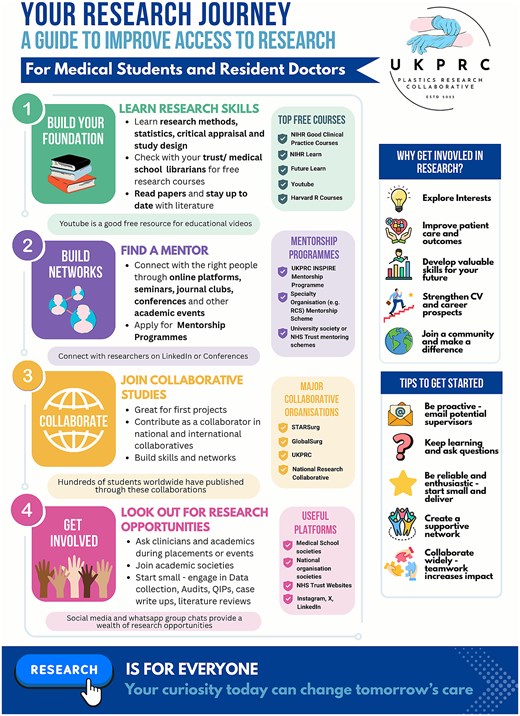
Shows the self-developed stepwise guidance poster designed to improve medical students’ and resident doctors’ access to research.
Evidence from widening access initiatives illustrates this principle and emphasizes the benefits of earlier intervention. Initiatives before medical school entry have shown promise in diversifying participation through distinct yet complementary approaches [23, 24, 25]. For example, “Provost’s Summer Mentorship Programme-Medicine” in the United States of America (USA) targeted academic skill development through SAT preparation and increased students’ sense of belonging in medicine [25]. Conversely, the “Medical Student Mentorship Programme” provided predominantly pastoral mentorship, pairing high school students from lower socioeconomic backgrounds or underrepresented groups with current medical students, thereby increasing the likelihood that they would apply to medical school [24]. Together, these programmes demonstrate how different mentoring domains address complementary barriers across the educational pipeline.
In this context, identity-concordant mentorship extends equity-focused mentorship by providing support that reflects shared identities and lived experiences, addressing barriers that academic or career guidance alone cannot overcome. Existing programmes indicate that targeted mentorship improves research engagement and career development among underrepresented trainees, from pre-university initiatives to postgraduate programmes, including “PROPEL” and the “West Coast Plastic Surgery Mentorship Programme” [23, 26, 27]. While existing programmes do not necessarily pair mentees with mentors from similar backgrounds, the “INSPIRE” programme matches students from underrepresented backgrounds with mentors who share similar lived experiences, incorporating the key principles of early, targeted mentorship with the additional dimension of an identity-concordant approach [9]. Following a successful 2025 pilot in plastic surgery, the programme has expanded to encompass all surgical specialties. In addition to improving representation, INSPIRE supports students in building competitive applications through research opportunities, co-authorship, and professional networking. Identity concordance, therefore, represents a novel dimension of mentorship that enhances established mentoring domains by strengthening representation and professional identity formation. The INSPIRE framework offers a scalable model that could be adapted across specialties as part of this broader strategy.
However, implementing identity-concordant mentorship is challenging. Most formal mentorship programmes, such as the Royal College of Surgeons’ mentorship schemes [10], primarily target postgraduate trainees, so introducing mentorship earlier in the medical training pathway offers considerable scope for expansion. National infrastructure, potentially coordinated through organizations such as the National Institute for Health and Care Research, together with broader faculty mentor training, may help address these gaps. Local mentorship will also play an important role by building community, connecting local research networks, and increasing the visibility of opportunities within individual institutions. National Health Service (NHS) regional education teams and individual NHS trusts should therefore support formal mentorship schemes that connect medical students and resident doctors with accessible, trained mentors.
The barriers identified in this study are consistent with the international literature, which describes inadequate mentorship, limited access to research opportunities, insufficient protected time and funding, and insufficient research training as recurring obstacles to early research engagement [7, 28, 29]. Although these barriers are expressed differently across healthcare systems, the underlying inequities remain consistent. Improving research access requires coordinated institutional investment that extends beyond mentorship, including equitable access to research training, financial support, and transparent academic pathways [9].
Collectively, these recommendations reframe research training as a core curriculum competency rather than extracurricular enrichment, ensuring equitable participation in academic medicine. Given recent national data showing a marked decline in clinical academics under 36 years of age, improving early access to mentorship and academic opportunities is increasingly urgent and central to sustaining the future clinical academic workforce [30].
Strength and limitations
This study has several strengths, including capturing national perspectives among UK medical students and resident doctors that have enabled examination of the early clinical-academic pipeline. Analyses used predetermined recoding, item-level reporting of barriers, and sensitivity analyses to strengthen interpretability.
Limitations include the cross-sectional design, self-report bias, the inability to calculate a formal response rate, and the potential overrepresentation of individuals engaged in research. The complete four-item socioeconomic disadvantage score had 34.3% missing data. Sensitivity analysis mitigated this limitation but did not eliminate it. The barrier burden index showed low internal consistency and should be regarded as a pragmatic indicator of cumulative barriers rather than a validated scale. Although the primary model met an approximate events-per-parameter threshold, sparse categories may still have affected estimates in smaller subgroups. The models should therefore be interpreted as explanatory rather than predictive [21, 22].
Conclusions
Mentorship access and research opportunities are unevenly distributed among UK medical students and resident doctors. Mentorship was associated with a lower research barrier burden and greater academic engagement, whereas childhood socioeconomic disadvantage was associated with a higher research barrier burden. Addressing these inequities requires structured mentorship, transparent research opportunities, financial support, and practical research training. Without such reforms, clinical academia will continue to favour individuals already supported by mentorship and networks, while equally capable peers face limited and inequitable access to opportunities, progression, and success. Achieving equitable diversification of the clinical academic workforce is therefore likely to remain unattainable without meaningful policy reform and significant stakeholder engagement.
Acknowledgements
We thank the UK Plastics Research Collaborative (UKPRC) MENTOR Study Group for distributing the questionnaire nationally across the UK. We gratefully acknowledge PolyNovo for their in-kind support of the INSPIRE 2026 Programme, contributing to the support and delivery of the non-technical skills in surgery curriculum, Beyond the Scalpel. This initiative strengthens essential professional capabilities for surgeons, including communication skills, human factors, presentation skills, and other related competencies that support safe, effective, and compassionate surgical practice. This will be published upon completion of the programme in 2027.
Author contributions
K.J.C. and U.R. contributed to study conceptualization, methodology, investigation, resources, data curation, formal analysis, writing the original draft and reviewing and editing the manuscript. They are also joint first authors and contributed equally. S.S.G., L.M., and D.C.R. contributed to formal analysis, data curation, and reviewing and editing the manuscript. L.F. contributed to study methodology, literature review, reviewing and editing the manuscript. M.S.S., C.N.B., and R.E. contributed to reviewing and editing the manuscript. N.C., S.F., and P.A.B. contributed to study supervision, project administration and reviewing and editing the manuscript.
Conflicts of interest
None declared.
Funding
No financial funding was received in the preparation of the manuscript.
Data availability
All reported data are incorporated into the main manuscript and the supplementary material. Data are available upon reasonable request to the corresponding author.
References
Author notes
Kai Jian Chin and Umar Rehman contribute equally to the preparation of the manuscript.
UKPRC Collaborators: Ahmed Al-Naqqash, Ahmed Turkman, Ambreen Sayed, Angela Sara Philip, Anisha Jain, Archana Pradeep, Berivan Macit, Chirag Goyal, Ciaran Sandhu, Danny Kazzazi, Dina Atra, Elizabeth Faulkner, Gozde Gultekin, Gwennan Shewring, Hajar Abdulla, Hajra Akhtar, Ioannis Hannadjas, Jonathan Herron, Konstantinos Devetzis, Maria Zareef Kahloon, Mustafa Qais Muhsin Al-Khafaji, Neha Biju, Olivia Hird, Rawan Jaibaji, Rory White, Sameera Aljuwaiser, Samuel Offer, Sevasti Panagiota Glynou, Shradha Limbu, Shreya Kantamneni, Soyoung Lee, Tharsiga Yogarajah, Vikram Sharma, Walter William, and Zlatan Ibradzic.


